Lessons from Danny Meyer’s Union Square Hospitality Group · for dermatology practices
Hire People Who Care. Then Take Care of Them First.
Danny Meyer hires on a simple idea: any new hire can learn to set a table, but no one can be trained to care about setting it well. So he hires for the caring on purpose, and his company says its people look after one another first. Your clinic can hire, and look after its team, the same way.
What you’ll take away
- The problem
- Clinics hire the skill they can see and hope for the caring they can’t. Then they spend that caring all day without refilling it.
- What to remember
- Hire people who care, on purpose, and teach them the rest. Then take care of them first, so they have care to give.
- What to do differently
- Write down the caring you’re hiring for and score every candidate the same way. Care for the team in ways they can count. In the room, patient safety still comes first.
30-Second Summary
- Skill is easy to see. Caring isn’t. Danny Meyer’s Union Square Hospitality Group (USHG) began with Union Square Cafe in 1985.1 Meyer wrote that his company’s hiring misses usually came from misjudging a person’s emotional skills.2
- So he hires for the caring on purpose. His ideal hire is a “51-percenter,” whose strengths tip just past even, 51 to 49, toward emotional hospitality over technical skill, across five named emotional skills. Technique can be taught, he wrote; a real desire to do it well can’t.2 USHG’s careers page still says so in 2026, calling these hires “100%ers.”3
- Then the team comes first. USHG says its people look after one another first, and that this sets how the company operates.1 Meyer ranks raises and promotions first among ways to look after staff, and he wants teammates to answer to one another for the care they show.4
- In health care, supported teams go with happier patients. Patients on hospital units with better nurse working conditions were more than twice as likely to be highly satisfied with their care.5
- In your clinic: write down the caring you’re hiring for and score every candidate the same way; teach the software; care for the team in ways they can count; and make covering each other the job. In the room, the patient’s safety and care still come first.
The Problem
What Goes Wrong When You Hire the Résumé and Spend the Warmth
Picture a busy restaurant hiring a server. One candidate has years in fine dining and carries plates without a wobble. The other is newer, curious and plainly kind. The manager has twenty minutes, and the plates are easy to see. He hires the plates.
The new server is quick and correct. He also never notices the couple by the noisy kitchen door who want a quieter table. Nothing he does is wrong. Nothing he does feels like care.
Meanwhile, the warm server hired last year has become the one everyone leans on: the extra table, the hard guest, the shift nobody wants. Nobody asks how she is doing, and by spring she is running on empty.
Most teams hire skill on purpose and warmth by accident, then spend the warmth without refilling it.
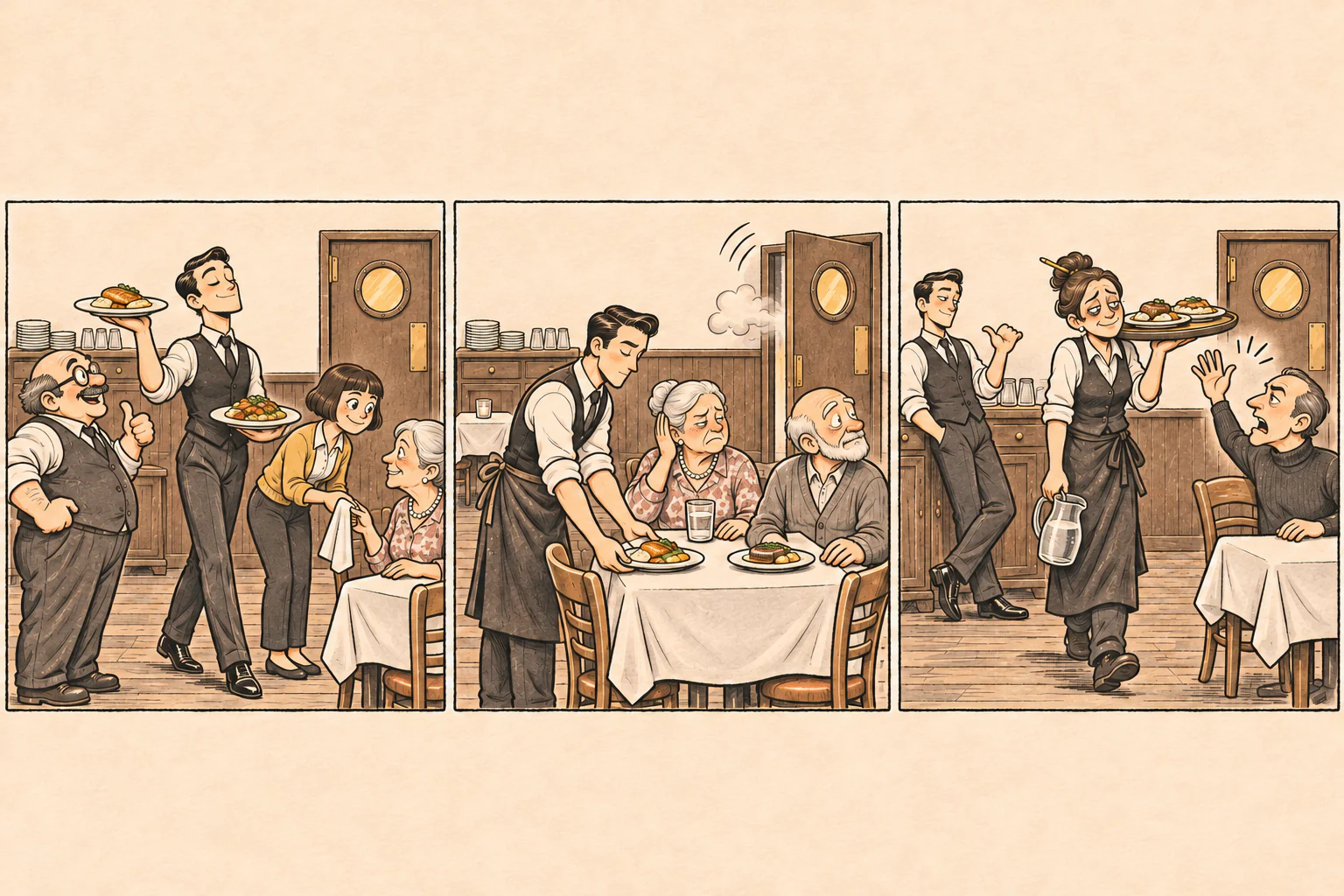
Danny Meyer knows how easy that first mistake is. He admitted that his company’s hiring misses usually came down to misjudged emotional skills.2
Failed hires, he wrote, are usually unwilling rather than unable: more “I won’t” than “I can’t.”2 A missing skill can be taught. In Meyer’s view, caring can’t.
The Exceptional Solution
Meyer’s Answer: Hire the 51 Percent, Then Look After the Team First
Meyer set out his answer in “The 51 Percent Solution,” a chapter of his 2006 book Setting the Table.2 He looks for people whose strengths tip just past even, 51 to 49, toward emotional hospitality over technical excellence. He calls them 51-percenters.2
Here is what that looks like, in his book and on his company’s own pages:
Name the caring. Meyer lists five emotional skills to hire for: optimistic warmth (real kindness and a hopeful outlook), intelligence (a hunger to learn, more than book smarts), work ethic (wanting every task done as well as possible), empathy (noticing others’ feelings, and how you affect them), and self-awareness and integrity (knowing yourself, and owning doing the right thing).2 Naming the emotional skills you want, he wrote, makes a good hire more likely all by itself.2
Teach the table, hire the caring. Laying a table well is a skill anyone can pick up, Meyer wrote; the deep wish to get it right is the part no one can teach. He loves to see a server hold a wine glass toward the light, hunting for smudges: attention to something most guests would never spot.2 Skills still count. USHG’s careers page calls technical skills “vital, but they can be taught.”3
Put the team first. USHG says its purpose is to make people’s lives richer through what it calls Enlightened Hospitality, with its own people looking after one another first as the basis for how it runs. Its About page calls its approach “employee-first.”1
Make care something staff can count. Meyer calls raises and promotions “the single best way to take care of our employees.”4 USHG’s careers page lists a retirement-plan match of up to 5 percent, paid parental leave and an employee relief fund.3 And in Meyer’s view, as HR Dive reported it, leaders help most by expecting teammates to look out for one another and holding them to it.4
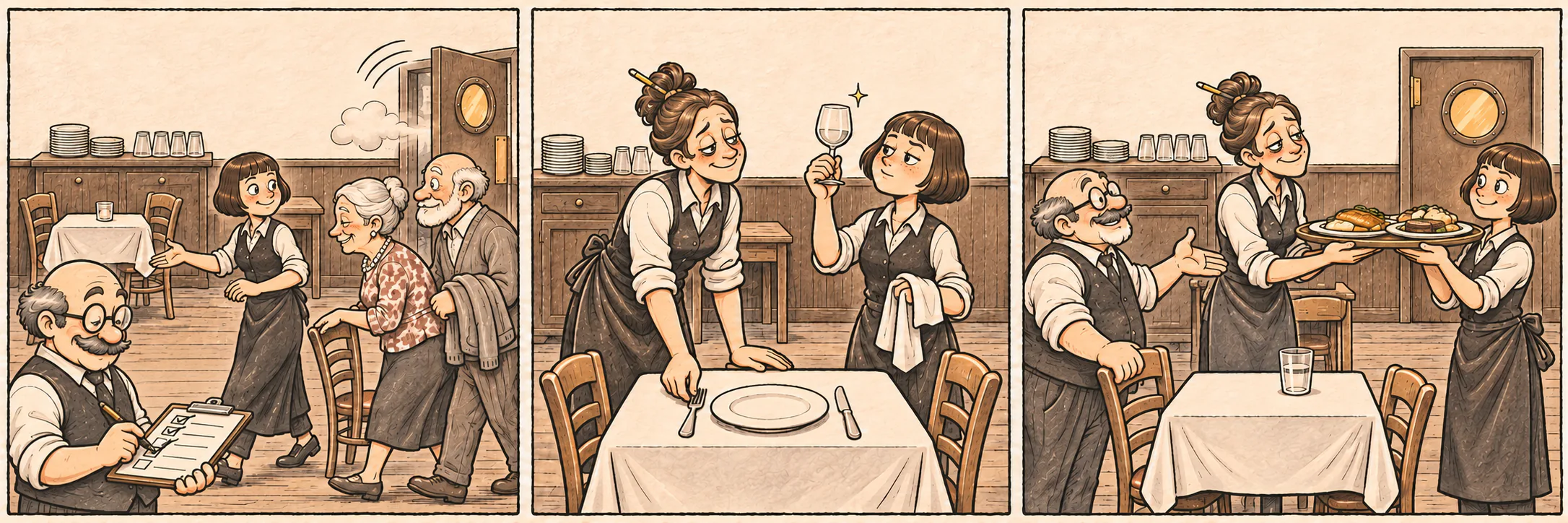
The ProblemA restaurant is hiring a server. The most polished résumé is the easiest thing in the room to see.
The Mediocre ApproachHire the plates, spend the warmth
Action
Hire what’s easy to see.
- A friendly chat, and the best résumé wins
- Once hired, the warm people get the extra tables
Poor outcome
Correct, cold and tired.
- Service is right, and doesn’t feel like care
- The warm people run out of energy
The Exceptional ApproachMeyer’s answer: hire the 51 percent, care for the team first
Action
Name the caring, teach the rest, care first.
What Made It Last
The difference wasn’t a slogan. It was what stood behind it:
Written down, not just felt. The 51 percent idea is in Meyer’s 2006 book, and it is still on USHG’s careers page in 2026.2, 3
Care you can count. Meyer names raises and promotions; USHG lists a retirement match, paid parental leave and a relief fund.4, 3
Everyone’s job. In Meyer’s view, leaders make caring for each other part of everyone’s job, and hold people to it.4
The restaurant in our first story hired the plates and spent the warmth. Meyer hires for the caring, and his company says the people who bring it come first.
The mechanism
Why It Works
Hiring for caring and caring for the hires sound like two ideas. They work as one loop: choose people who care, teach them what can be taught, look after them so they have care to give, and keep the whole team caring for each other.
Tap or click a card to see why it works.
-
Why it works
- Easy to misread. Meyer traced most of his hiring misses to misjudged emotional skills.2
- Say what you want. Naming the emotional skills you want up front, he wrote, improves your chances.2
- Same questions, same scoring. In a 2022 re-analysis of hiring research, structured interviews ranked first at predicting job performance.6
-
Teach the table, hire the caring.
Skills can be taught. Caring, Meyer says, has to be hired.2
-
Why it works
- First, in writing. USHG’s About page calls its approach “employee-first.”1
- Care you can count. Meyer puts raises and promotions at the top of the ways to care for employees.4
- The pattern. In service businesses, studies pairing staff surveys with customer surveys found happier staff alongside happier customers and better-rated service.7
-
Make caring for each other the job.
Leaders hold the team to it.4
Why it works
- Accountable to each other. In Meyer’s view, a leader’s best move is to make teammates answer to one another for how they treat each other.4
- Jazzed teams. For a regular guest, he said, the experience is “directly correlated” with how much the team enjoys working together.4
- More than a mood. In a review of service businesses, the support employees got inside the company was linked to their service by several routes, not only through how satisfied they felt.8
The evidence
The Results, and Where Else It Works
Two bodies of research speak to Meyer’s two halves. Hiring research asks which methods find the right people.6 Health-care research asks how patients fare on teams that are supported, and on teams that are worn out.5, 9 Flip each card for the result and the lesson to take home.
Tap or click a card to flip it.
-
First place for structured interviews among common ways to choose new hires, in a 2022 re-analysis of hiring research
- The method: Every candidate gets the same job-related questions, scored the same way.
- What it predicted: How well people later did the job.
Exceptional results6
Ranked first structured interviews, among common ways to choose new hires
- When researchers re-checked earlier reviews of hiring methods, structured interviews came out on top for predicting how well people did the job.
- Structured means the same questions for every candidate, scored against the same standard.
Valuable lesson: Ask every candidate the same questions about caring, and score them the same way.
Source: Sackett et al., J Appl Psychol 2022 · evidence row 6
-
More than twice as likely to be highly satisfied with their care, for patients on hospital units with better nurse working conditions
- The support: Enough staff, good backing from managers and good doctor-nurse relations.
- What patients said: How satisfied they were with their care.
Exceptional results5
More than twice as likely to be highly satisfied with their care
- Where nurses had enough staff, backing from managers and good teamwork with doctors, patients were more than twice as likely to be highly satisfied.
- Nurses on those units reported less burnout.
Valuable lesson: Count staffing, support and teamwork as part of patient care.
Source: Vahey et al., Med Care 2004 · evidence row 5
-
About twice the odds of a patient safety incident when physicians were burned out
- The strain: Physicians reporting burnout.
- What was counted: Patient safety incidents.
About twice the odds of a patient safety incident, with burnout
- Burned-out physicians had about twice the odds of a patient safety incident.
- Across health professions, burnout also went with lower quality and safety of care.
Valuable lesson: Treat your team’s exhaustion as a patient-safety issue.
Source: Hodkinson et al., BMJ 2022 · Salyers et al., J Gen Intern Med 2017 · evidence row 9 · evidence row 10
Your dermatology clinic
Bringing It Home to Your Dermatology Clinic
Your clinic runs on caring you can’t read on a résumé: the front-desk voice that settles a worried caller, the MA who notices a patient trembling before a biopsy, the scheduler who double-checks a Mohs date because it matters. And it runs on people who give that caring all day.
Name the caring: before you post a front-desk, scheduler or MA job, turn Meyer’s five skills into things you could see at your desk: stays kind when the phones pile up, asks real questions, sweats the small details, notices an anxious patient, owns a mistake. Ask every candidate the same questions, and score them before you talk them over.
See it at work: emotional skills show best in the work itself. Try a short, paid role-play in which a teammate plays a worried caller. Give every finalist the same caller, the same time and the same score sheet, and score what each one does. Candidates never meet real patients or see patient information.
Keep the floor: privacy, identity checks, certification and scope of practice are pass/fail. Warmth never buys an exception. Then teach the software with a written plan, a named trainer and a sign-off.
Take care of them first: make care something people can count. A path to a raise or the lead role. Covered lunch breaks on Mohs days, with the person covering named at the morning huddle. A schedule that ends when it says it will.
Make covering each other the job: when one person is swamped and others are free, the lead steps in: “Let’s split the next three rooms.” At the weekly huddle, the manager names one moment when someone covered for a teammate.
Keep patient safety first: staff first is about where you invest. In the room, the patient’s safety and clinical care come first. A break never delays a bleeding wound or a worried call about a result, and nonclinical staff send any clinical question to a nurse or clinician.
Here’s how that plays out in two everyday moments. Each one starts with the problem, follows the mediocre approach to its outcome, then rewinds to the same moment for the exceptional approach.
Example One: Two Finalists, One Hour
- The Problem
The front desk has an opening and two finalists. One has eight years at a busy dermatology desk; the other has worked a busy pharmacy counter. Interviews start in an hour, and nobody has written down what the job needs beyond the software.
 Front-desk lead:Eight years at a derm desk. Easy call?Practice manager (thinking):The software’s easy to see. The caring isn’t.
An hour before the interviews. Nothing is decided yet, so this is the cheapest moment to choose what to look for. - The Mediocre ApproachThe action
 Practice manager:You know our software. Can you start Monday?Candidate:Monday works.Practice manager (thinking):We’re so short. Done.
Hire the résumé. A friendly chat, no plan, and the skill anyone can see makes the call. - The Mediocre ApproachThe poor outcome
 Caller (on the phone):It’s been a week. Should I be worried?New hire:Results can take a while. Anything else?Nurse (thinking):His third call this week.
Three months later. Every answer is correct, and the worry goes unheard. It comes back as repeat calls the nurse has to untangle. Rewind. Same finalists, same moment, same choice. This time, they name the caring first.
- The Exceptional ApproachThe action: name the caring, then test it
 Front-desk lead (playing a caller):It’s been a week. Should I be worried?Candidate:Waiting is hard. Let me get this to our nurse.Practice manager (thinking):Heard the worry. Sent it to the nurse.
Same caller, same time, same sheet. They wrote down the caring first, and each finalist gets the same short, paid role-play. One answers with the facts; the other hears the worry and hands it on. - The Exceptional ApproachThe exceptional outcome
 Caller (on the phone):It’s been a week. Should I be worried?Front desk:That wait is hard. I’m sending this to our nurse now.Nurse:Got it. I’ll call him back.
Three months later. She has signed off on the software, and the worried caller is heard once and reaches the nurse the same day.
Example OneAt a glance
The ProblemThe front desk has two finalists: one with eight years at a dermatology desk, one from a busy pharmacy counter. Interviews start in an hour, and nobody has written down what the job needs beyond the software.
The Mediocre ApproachHire the résumé
Action
Chat, then hire what’s easy to see.
- A friendly talk with no plan
- “You know our software. Can you start Monday?”
Poor outcome
Correct, and cold.
- Three months later, a worried caller gets facts, not care
- His repeat calls land on the nurse
The Exceptional ApproachMeyer’s way: name the caring, teach the rest
Action
Decide what caring looks like, then see it.
- The same paid role-play, time and score sheet for each finalist
- Privacy and identity checks stay pass/fail; the software goes on the training plan
Exceptional outcome
Heard once, sent to the nurse.
- She signs off on the software
- A worried caller reaches the nurse the same day
Example Two: Three Rooms, One MA
- The Problem
On a full Mohs day, the lead MA sees one MA turning over three rooms alone, with no lunch yet, while two colleagues, caught up on their charts, chat at the station.
 Dana, MA (thinking):Room 3, then 4, then 5. Lunch is a rumor.Lead MA (thinking):She’s alone on all three.
Caught at 12:40. The next three rooms haven’t started, so this is the easy moment to share the load. - The Mediocre ApproachThe action
 Lead MA:You’re a machine, Dana!Lead MA (thinking):She’s the fast one. She’ll manage.
Cheer her on, leave her alone. Kind words, and the load stays on one person. - The Mediocre ApproachThe poor outcome
 Patient:Did we get forgotten?Dana, MA:So sorry. We’re running behind.Dana, MA (thinking):I can’t keep doing this.
An hour later. The rooms back up, two patients wait past their times, and the best MA on the floor is running on empty. Rewind. Same hallway, same moment, same problem. This time, the team covers each other.
- The Exceptional ApproachThe action: cover each other
 Lead MA:Let’s split them. Sam, take 3. Kai, 4. I’ve got 5.Kai, MA:On it.Dana, MA:Thank you. Back by 1:15.
Share the load. The lead splits the three rooms on the spot. Every room still gets its full cleaning and setup, and Dana gets a covered lunch. - The Exceptional ApproachThe exceptional outcome
 Dana, MA:Mr. Ortiz? We’re ready for you.Patient:Right on time.
An hour later. The rooms run on time, Dana is fed and warm with her next patient, and covering each other is how the floor works.
Example TwoAt a glance
The ProblemOn a full Mohs day, one MA is turning over three rooms alone with no lunch, while two caught-up colleagues chat at the station. The lead MA notices.
The Mediocre ApproachKind words, no help
Action
Cheer her on.
- “You’re a machine, Dana!”
- The load stays on one person
Poor outcome
Behind, and running on empty.
- Two patients wait past their times
- An hour later, Dana is still on her feet and unfed
The Exceptional ApproachMeyer’s way: hold the team to caring for each other
Action
Split the load now.
- “Let’s split them. Sam, take 3. Kai, 4. I’ve got 5.”
- Every room keeps its full setup, and Dana gets a covered lunch
Exceptional outcome
On time, with energy to spare.
- The rooms run on schedule
- Covering each other becomes how the floor works
Your clinic
More Ways to Hire the Caring and Care for the Team
Same pattern every time: name the caring, care for the people who bring it, and make covering each other the job.
| The moment | Who acts, and how | Done before it moves on |
|---|---|---|
| Writing a job post: The scheduler opening goes up Monday, and nobody has said what “good” looks like. | The practice manager writes the five skills as behaviors, picks the same questions for every candidate, and asks the front-desk lead to score too | The scoring sheet is written before the first résumé is read |
| A new hire’s second week: A new scheduler keeps booking biopsy follow-ups in the wrong slot. | The front-desk lead asks privately, “Is this something we haven’t taught you yet?” and re-teaches with a checklist. Until sign-off, she checks every Mohs and biopsy follow-up booking against the interval the clinician ordered | Sign-off on the checklist; only the clinician decides how soon a follow-up must be |
| Annual review: A front-desk staffer calms anxious new patients, day after day. | The manager and the physician owner name that behavior in the review and attach a raise or a defined step toward front-desk lead | She leaves the review knowing the next role and what it pays |
| A flu-season phone surge: Hold times climb, and the front desk is fraying. | The manager moves a billing colleague to the phones for the peak hour with the clinician-written red-flag script, and asks the desk, “What do you need to get through today?” | Any red flag goes straight to a nurse, and the callback list is cleared before close |
| Clinic days that keep running late: Three days running, the last patient is roomed after closing, and the MAs miss their own evenings. | The manager reviews the schedule template with the lead MA and the clinician; the clinician decides which visit types need longer slots | A revised template that ends on time, checked again in a month |
Adapt the moments and the owners to your own team. Anything clinical still goes to a clinician.
Your move
Try It Today
Hire the caring. Teach the rest. Care for the team first.
Try it for one week. No new software and no budget.
- Write down the caring. With your front-desk lead, turn Meyer’s five skills into one behavior each that you could see at your desk.
- Draft three questions. For your next opening, write three questions you will ask every candidate, and what a strong answer sounds like.
- Pick one real act of care. On your busiest day this week, cover a lunch break for each person, with the person covering named at the morning huddle.
- Thank one cover a day. At each morning huddle, thank someone who covered for a teammate the day before.
- Fix one thing. On Friday, ask each person what would make next week easier, and fix one thing they name.
Anything urgent still goes straight to the clinician.
Skill can be taught. So look for the caring when you hire. Then take care of the people who bring it.
Explore the Evidence
14 sources · what each source is, what it found, what it supports here, and its limits
How this page was built: it uses only the 24 claims that an independent reviewer accepted from the research package on 10 November 2026 (a scoped acceptance). Further reporting in the research package, including other critical accounts, was outside that reviewed set and is not used here; leaving it out is not a finding that it is wrong. Almost everything about the philosophy comes from Danny Meyer or USHG. The hiring ideas come from one excerpt of a single chapter of his 2006 book, published by Nation’s Restaurant News in 2007 (reference 2); the book itself was not opened. The 51-49 split is Meyer’s image for a priority, not a documented scoring weight, and no USHG interview guide or scoring rubric was found. “51-percenter” is the 2006 book’s term; USHG’s careers page now says 100%ers (reference 3). The five skills are Meyer’s own definitions, paraphrased here, not validated traits. That spelling out the skills you want raises your odds is his judgment, not a measurement; hospitalitarians is his hope about temperament, not a measured trait. The wine-glass image is his own observation. The About and careers pages (references 1 and 3) are undated and were read on 10 November 2026; they show the company’s message, not how hiring or staff care work day to day. The listed benefits are the company’s claim; eligibility rules are not stated and were not checked. Meyer’s 2025 remarks come from HR Dive’s report of his March 2025 conference keynote (reference 4); the accountability point is HR Dive’s paraphrase, and “directly correlated” is his belief, not a measured correlation. Two reports point the other way, and the teaching on this page does not rest on them. After USHG’s pay change called Hospitality Included, Meyer said in early 2018 that 30 to 40 percent of the company’s longer-serving front-of-house staff (five to eight years with the company, by a USHG spokesperson’s definition) left over an unspecified period, while back-of-house pay rose about 20 percent (reference 13). These are his own figures, relayed second-hand by Eater NY from a Nation’s Restaurant News report behind a registration wall; they count only those staff, not company-wide turnover, and nothing here shows that the pay change caused the departures. In 2020, USHG withdrew a newly required arbitration agreement after staff raised concerns, saying that listening to its team is what the company is built on (reference 14); that is Restaurant Dive’s report, which relays Eater, whose original was not opened, and no contract or court record was examined. Other reporting on USHG’s pay and employment history is recorded in the research package but falls outside the reviewed claims, so it is not used here. No independent figures on USHG staff turnover, engagement or guest satisfaction were found, and nothing here shows that USHG’s success was caused by its staff-first approach. The research comes from other settings and was read as abstracts. The health-care studies (references 5, 9, 10 and 12) are observational: they show working conditions, burnout and patient experience or safety moving together, not that changing working conditions changes outcomes, and none is from outpatient dermatology. The service-business reviews (references 7 and 8) pooled correlational studies of customers, not patients; the role of service quality in reference 7 comes from a statistical model on pooled data, not a tested causal pathway, and the strength of the links varied with the type of service and the study method. Reference 8 adds that the links run through more than staff satisfaction, and its authors doubt that firms should always push staff satisfaction as high as it can go. The hiring reviews (references 6 and 11) come from general workforce research, not health care. They do not validate any clinic scorecard. Measured emotional intelligence predicted better performance in jobs heavy in emotional work and worse performance in jobs light on it, and the review does not show whether front-desk clinic work counts as heavy in emotional work. No study was found that tested hiring receptionists or medical assistants for warmth. The restaurant scene that opens the chapter is hypothetical, and both comic strips draw it in an invented, unbranded restaurant: the tryout, the checklist, the training and the break are illustrative staging, not scenes Meyer reported and not a USHG restaurant; the wine glass held to the light is his own image. The two clinic examples, the extra ideas and the one-week experiment are illustrations of the mechanism, written for this chapter with fictional people; they are not observed events or tested interventions, and no part of this approach has been tested in a dermatology clinic. Status shows how each source was read: HTML (web page, read in full) or ABS (abstract).
| Source | Type and context | Key finding | What it supports here | Material limitation |
|---|---|---|---|---|
| [1] · HTMLUnion Square Hospitality Group. About. Accessed 10 November 2026 | Company web page USHG’s own description of itself | USHG began with Union Square Cafe in 1985; its mission statement names enriching lives through Enlightened Hospitality, with its people looking after one another first as the basis of how it operates; it calls its approach employee-first; it also lists an organizational consulting business (Hospitality Quotient) and an investment platform (Enlightened Hospitality Investments) | The company’s stated commitment to care for its team first (summary, solution step 3, mechanism card 3) | Company self-description, undated; it shows the message, not the practice |
| [2] · HTMLMeyer D. Meyer: 51-percenters have five key emotional skills necessary to provide excellent hospitality. Excerpt from Setting the Table (2006). Nation’s Restaurant News, 2007 | Book excerpt Meyer’s own account of hiring at USHG, from the hiring chapter of his 2006 book, published by a trade magazine on 5 February 2007 | The 51-49 tilt toward emotional hospitality over technical excellence (“51-percenters”); five emotional skills (optimistic warmth, intelligence as curiosity, work ethic, empathy, self-awareness and integrity); technique can be taught but caring deeply cannot, with the wine-glass image; failed hires more often unwilling than unable; most hiring misses traced to misjudged emotional skills, and spelling out the skills sought; hospitalitarians | The problem, the solution steps, mechanism cards 1 and 2, the source-case comparison and the clinic translation | Meyer’s own account through 2006; one chapter excerpt, the full book not opened; a metaphor for priority, not a scoring weight; no outcome data; his judgments and hopes, not measured traits |
| [3] · HTMLUnion Square Hospitality Group. Careers. Accessed 10 November 2026 | Company web page USHG’s careers page | USHG says technical skills matter but can be taught, so it looks for people who lean a little more toward hospitality (51 percent) than toward technical skill (49 percent), whom it calls 100%ers; listed benefits include a 401(k) match of up to 5 percent, paid parental leave and an employee relief fund (HUGS) | That the hiring idea is current (summary, solution steps 2 and 4, mechanism card 2, the comparison) | The company’s own claims; it shows stated policy, not how hiring is done; benefit eligibility is not stated and was not independently checked |
| [4] · HTMLWassel B. Report of Danny Meyer’s conference keynote (19 March 2025). HR Dive, 26 March 2025 | Trade news report of a keynote Meyer speaking in March 2025, as reported by HR Dive | Meyer named raises and promotions as the top way to look after staff; in HR Dive’s paraphrase, a leader’s best lever is making team members answer for how they treat each other; he said a returning guest’s experience rises and falls with how much the team enjoys the people it works with | What care means in practice (summary, solution step 4, mechanism cards 3 and 4, the comparison, Example Two) | Reported remarks, partly in the reporter’s paraphrase; Meyer’s beliefs, not measured correlations; the article’s headline framing of Meyer’s companies is not used |
| [5] · ABSVahey DC, Aiken LH, Sloane DM, Clarke SP, Vargas D. Nurse burnout and patient satisfaction. Med Care 2004 | Cross-sectional survey 820 nurses and 621 patients on 40 units of 20 urban US hospitals | Where nurses described enough staff, solid backing from administrators and good working relations with doctors, patients were over twice as likely to be highly satisfied with their care; those nurses also reported markedly less burnout | Results card 2 and the summary | Abstract only; an association at one point in time, not an intervention; inpatient nursing units, published 2004 |
| [6] · ABSSackett PR, Zhang C, Berry CM, Lievens F. Revisiting meta-analytic estimates of validity in personnel selection. J Appl Psychol 2022 | Re-analysis of hiring research General personnel selection | Earlier validity estimates were inflated by over-correction; average validities fall by .10 to .20; structured interviews ranked first among selection methods | Results card 1 and mechanism card 1: same questions, scored the same way | Abstract only; general job performance, not health care; it does not validate any clinic scorecard or Meyer’s 51-49 image |
| [7] · ABSBrown SP, Lam SK. A meta-analysis of relationships linking employee satisfaction to customer responses. J Retailing 2008 | Meta-analysis Service-business studies that paired staff measures with customer measures | Employee satisfaction was positively associated with customer satisfaction and with customer-perceived service quality; a path model on the pooled data showed perceived service quality fully accounting for the link; strength varied with the type of service and with study method | Mechanism card 3: the pattern linking staff and customers | Abstract only, effect sizes not read; correlational; the mediation is a statistical model on pooled data, not a tested causal pathway; customers of service businesses, not patients; not tested in clinics |
| [8] · ABSHogreve J, Iseke A, Derfuss K, Eller T. The service-profit chain: a meta-analytic test of a comprehensive theoretical framework. J Mark 2017 | Meta-analysis Business and service settings | All proposed links of the service-profit chain were significant, varying widely in size by type of service; the support staff get inside the company reached service performance by several routes beyond staff satisfaction; the authors say this questions whether firms should always push staff satisfaction as high as it can go | Mechanism card 4: care is more than a mood | Abstract only (publisher metadata); number of studies and effect sizes not read; business settings, not patients; no clinic effect estimate |
| [9] · ABSHodkinson A, Zhou A, Johnson J, et al. Associations of physician burnout with career engagement and quality of patient care: systematic review and meta-analysis. BMJ 2022 | Systematic review and meta-analysis 170 observational studies of 239,246 physicians, to May 2021 | Physician burnout went with patient safety incidents (odds ratio 2.04, 95% CI 1.69 to 2.45) and with patient dissatisfaction (odds ratio 2.22, 95% CI 1.38 to 3.57; 8 studies) | Results card 3 | Abstract only; observational studies with high heterogeneity; the dissatisfaction estimate rests on 8 studies; association, not proof that burnout causes incidents |
| [10] · ABSSalyers MP, Bonfils KA, Luther L, et al. The relationship between professional burnout and quality and safety in healthcare: a meta-analysis. J Gen Intern Med 2017 | Meta-analysis 82 studies of 210,669 health-care providers in several disciplines and countries, through March 2015 | Burnout was negatively related to quality (r = −0.26) and to safety (r = −0.23), effects the authors describe as small to medium | Results card 3 (second line) | Abstract only; pooled correlations from observational studies |
| [11] · ABSJoseph DL, Newman DA. Emotional intelligence: an integrative meta-analysis and cascading model. J Appl Psychol 2010 | Meta-analysis General workforce studies of emotional intelligence and job performance | Ability-based emotional intelligence predicted job performance inconsistently: better performance in jobs heavy in emotional work, worse in jobs light on it | Context and limits only (named in the evidence intro); not used in the teaching | Abstract only; ability-based and mixed measures differ; it does not establish whether front-desk clinic work counts as heavy in emotional work |
| [12] · ABSKutney-Lee A, McHugh MD, Sloane DM, et al. Nursing: a key to patient satisfaction. Health Aff 2009 | Cross-sectional study 430 US hospitals, using the national hospital patient survey (HCAHPS) | Each HCAHPS patient-satisfaction measure showed a significant link with the hospital’s nurse work environment | Context and limits only (named in the evidence intro); not used in the teaching | Abstract only; hospital-level association, not an intervention; inpatient hospitals, not outpatient clinics |
| [13] · HTMLDai S. Danny Meyer Admits Large Portion of Staff Left Over No-Tipping Changes. Eater NY, 6 February 2018 | News report Eater NY relaying Nation’s Restaurant News’ report of Meyer’s remarks at a February 2018 industry conference | In early 2018 Meyer said that 30 to 40 percent of USHG’s longer-serving front-of-house staff (five to eight years with the company, by a USHG spokesperson’s definition) left over time after Hospitality Included, and that back-of-house pay rose about 20 percent | Counterevidence and limits only (named in the evidence intro); not used in the teaching | Second-hand: the Nation’s Restaurant News original is behind a registration wall and was not seen; the figures are Meyer’s own; the period is unspecified; longer-serving front-of-house staff only, not the whole workforce; the headline’s causal framing is Eater’s, and this page does not claim the change caused the departures |
| [14] · HTMLManning L. Union Square Hospitality Group walks back arbitration agreement mandate. Restaurant Dive, 26 February 2020 | Independent trade journalism A report of a 2020 employee policy and its withdrawal, citing Eater | USHG dropped a mandatory arbitration agreement it had just brought in and required employees to sign, after staff raised concerns; the company said that listening to its team members is what it is built on | Counterevidence and limits only (named in the evidence intro); not used in the teaching | Relays Eater, whose original was not opened; that signing was required is Eater’s account as relayed; no contract or court ruling was examined; the replacement program was not followed up |
References
- Union Square Hospitality Group. About. ushg.com. Undated; accessed 10 November 2026. ushg.com/about
- Meyer D. Meyer: 51-percenters have five key emotional skills necessary to provide excellent hospitality. Excerpt from Setting the Table: The Transforming Power of Hospitality in Business (2006). Nation’s Restaurant News. 5 February 2007. nrn.com
- Union Square Hospitality Group. Hospitality Careers. ushg.com. Undated; accessed 10 November 2026. ushg.com/careers
- Wassel B. Report of Danny Meyer’s keynote at the Qualtrics X4 conference, 19 March 2025. HR Dive. 26 March 2025. hrdive.com
- Vahey DC, Aiken LH, Sloane DM, Clarke SP, Vargas D. Nurse burnout and patient satisfaction. Med Care. 2004;42(2 Suppl):II57–66. PubMed 14734943
- Sackett PR, Zhang C, Berry CM, Lievens F. Revisiting meta-analytic estimates of validity in personnel selection: addressing systematic overcorrection for restriction of range. J Appl Psychol. 2022;107(11):2040–2068. PubMed 34968080
- Brown SP, Lam SK. A meta-analysis of relationships linking employee satisfaction to customer responses. J Retailing. 2008;84(3):243–255. doi.org/10.1016/j.jretai.2008.06.001 · IDEAS/RePEc abstract
- Hogreve J, Iseke A, Derfuss K, Eller T. The service-profit chain: a meta-analytic test of a comprehensive theoretical framework. J Mark. 2017;81(3). doi.org/10.1509/jm.15.0395
- Hodkinson A, Zhou A, Johnson J, et al. Associations of physician burnout with career engagement and quality of patient care: systematic review and meta-analysis. BMJ. 2022;378:e070442. PubMed 36104064
- Salyers MP, Bonfils KA, Luther L, et al. The relationship between professional burnout and quality and safety in healthcare: a meta-analysis. J Gen Intern Med. 2017;32(4):475–482. PubMed 27785668
- Joseph DL, Newman DA. Emotional intelligence: an integrative meta-analysis and cascading model. J Appl Psychol. 2010;95(1):54–78. PubMed 20085406
- Kutney-Lee A, McHugh MD, Sloane DM, et al. Nursing: a key to patient satisfaction. Health Aff. 2009;28(4):w669–677. PubMed 19525287
- Dai S. Danny Meyer Admits Large Portion of Staff Left Over No-Tipping Changes. Eater NY. 6 February 2018. ny.eater.com
- Manning L. Union Square Hospitality Group walks back arbitration agreement mandate. Restaurant Dive. 26 February 2020. restaurantdive.com
Explore the evidence · Try it today · Read the Danny Meyer Daily Brief · More lessons from The Exceptional Private Practice