Lessons from The Ritz-Carlton · for dermatology practices
The Right Person to Fix It Is the One Who Heard It.
At The Ritz-Carlton, the employee who hears a guest’s problem owns it, with the authority to fix it on the spot. A dermatology clinic can make the same promise to every patient.
What you’ll take away
- The problem
- A patient mentions a problem to whoever is nearest, hears “that’s not my department,” and has to tell it again while it grows.
- What to remember
- Whoever hears it owns it: fix what your role allows right now, walk the rest to the right person, and write it down.
- What to do differently
- Decide in advance what anyone may fix on the spot, walk patients instead of pointing, and record what they tell you once.
30-Second Summary
- At The Ritz-Carlton, the employee who hears a complaint owns it. Its 1999 Gold Standards told every employee to break away from regular duties to solve a guest’s problem, then resolve it and record it.1
- Ownership came with real authority. In 1999, any employee could spend up to $2,000 to immediately correct a problem, so the person who heard it could act at once.2
- Too often, clinics quietly do the opposite: a patient tells whoever is nearest about a problem, hears “that’s not my department,” and has to tell it again to someone else while it grows.
- Ritz-Carlton’s own surveys tell the story. Staff scored 83% on decision authority in 1998, against a 55% norm, and 91% of guests gave one of the two top satisfaction ratings.1
- The dermatology version is simple: decide in advance what anyone may fix on the spot, walk patients to the right person instead of pointing, and write down what they tell you so they only say it once.
The Problem
What Goes Wrong When Every Problem Belongs to Someone Else
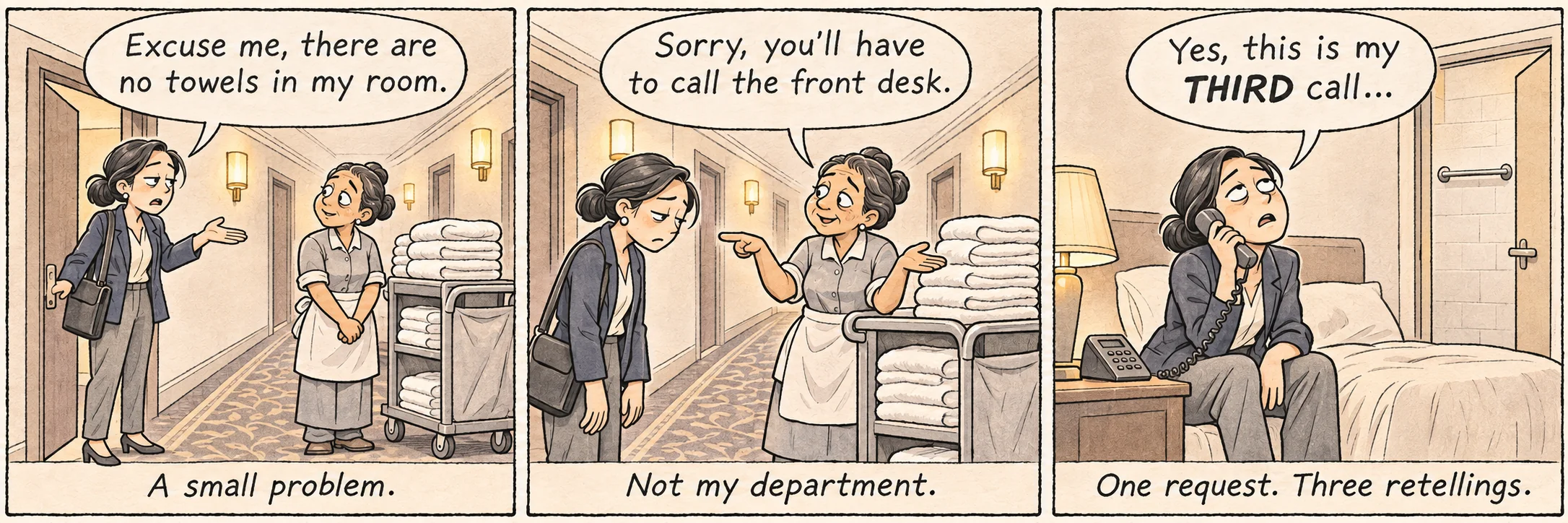
Picture a hotel guest getting back to her room late, after a long day of meetings. She has an early start tomorrow, and she finds there are no towels in her bathroom. Down the hall, a housekeeper is restocking a cart piled high with fresh towels.
The guest asks for a couple. The housekeeper is polite, and she is following the rules: requests go through the front desk. So she points to the phone. “Sorry, you’ll have to call the front desk.”
Now the guest calls, waits on hold and explains it all again. Someone will be sent up. Much later, still towel-less, she calls a third time and tells the whole story once more. By checkout, the problem isn’t towels anymore. It’s a guest who has learned that telling someone here doesn’t make anything happen.
Nobody was rude. Nobody was lazy. The damage came from the handoffs: every “not my department” turns one small fix into a wait, a retelling and a little less trust.
The Exceptional Solution
Ritz-Carlton’s Answer: Whoever Hears It, Owns It
The Ritz-Carlton wrote the opposite rule into its Gold Standards, the company’s written service standards. In the 1999 version, the employee who receives a complaint owns it: they resolve it and record it. Another basic tells every employee to break away from their regular duties to solve a guest’s problem or special need.1
Its 1999 empowerment process spells out what ownership looks like, step by step:1
Leave routine work. Whoever senses the need, whatever their job, puts down what they were doing.1
Act right away. Take positive action on the spot.1 In 1999, any employee could spend up to $2,000 to immediately correct a problem or handle a complaint.2
Check the reaction. Make sure the guest is actually satisfied, not just answered.1
Write it down. Document the incident, and record what the guest prefers so the next employee already knows.1
Still unhappy? Bring in help. If the guest remains dissatisfied, the problem goes up the line, not back to the guest.1
The dollar figure matters less than what it told every employee: you are trusted, and you can fix this now, without asking. The company’s Employee Promise named trust and respect among its commitments to staff.1 That is where the speed comes from, and the dignity too. The guest gets help from the first person they tell, and the employee gets to be the one who helps.
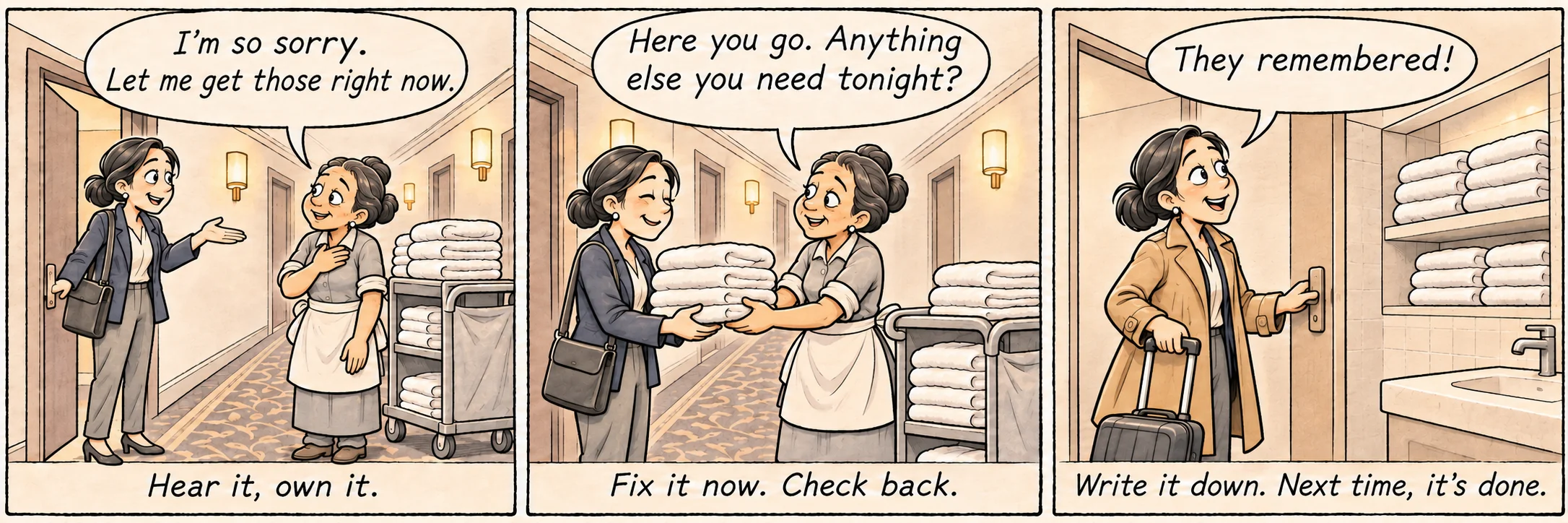
The ProblemA guest tells a housekeeper there are no towels in her room, and fresh towels are right there on the cart.
The Mediocre ApproachNot my department
Action
Send her to the desk.
- The housekeeper points to the phone
- The guest calls, waits on hold and explains it all again
Poor outcome
The problem grows.
- She tells the story a third time before towels arrive
- A two-minute fix eats her evening
- She leaves trusting the hotel a little less
The Exceptional ApproachRitz-Carlton’s answer: own it
Action
Own it on the spot.
- The housekeeper breaks away from her work and apologizes
- She brings towels right away and checks what else is needed1
Exceptional outcome
Fixed and remembered.
- The guest tells it once
- The preference is written down, so the next employee already knows1
- If she were still unhappy, help would come to her
The Record Behind It
Twice honored. Ritz-Carlton won the Malcolm Baldrige National Quality Award in 1992 and 1999, the first service company to win it twice.2
People stayed. Its 1999 award record reported staff turnover falling for nine years in a row.2
Owners earned more. Pre-tax return on investment rose from 5.3% in 1995 to 12.9% in 1999, the company reported.1
The mechanism
Why It Works
Ownership sounds like a slogan until you see what it changes. The guest stops being a messenger, and the employee stops being a bystander. Five things make it work:
Tap or click a card to see why it works.
-
Fix it while it’s small.
The person who hears it is the fastest fix.1
Why it works
- Every handoff adds a wait. A problem passed along sits in a queue, and the guest sits with it.
- “Right away” is in the rule. The 1999 process calls for leaving routine work and taking immediate positive action.1
- Small stays small. Two towels now is a favor. Two towels at midnight is a complaint.
-
No permission slip.
The authority travels with the person who heard it.2
Why it works
- A real budget. In 1999, any employee could spend up to $2,000 to immediately correct a problem.2
- No hunting for a manager. The fix happens where the guest is, while the guest is still there.
- Trust you can see. A ceiling that high tells every employee the company means it.
-
Trusted people act like owners.
Respect for staff becomes respect for guests.1
Why it works
- Written into the promise. Ritz-Carlton’s Employee Promise named trust and respect, and one basic gave staff a say in planning the work that affects them.1
- No one is “just” housekeeping. When every job can fix a problem, every job matters to the guest.
- The guest keeps their dignity too. Staff were told to escort guests to another part of the hotel instead of pointing the way.1
-
Close the loop.
Fixed means the guest says so.1
Why it works
- Check the reaction. The 1999 process doesn’t stop at the fix; it checks how the guest responds.1
- Write it down, pass it up if needed. The incident is documented, and a guest who is still unhappy gets more help.1
- Practiced every shift. Daily line-ups in every work area kept the standards in front of staff. In 2015, a company manager described line-ups built around one service value, with real examples and role-play.1, 3
-
Tell it once.
Write it down, so no one has to ask twice.1
Why it works
- Everyone notices. Each employee was responsible for identifying and recording individual guest preferences.1
- The record travels. Guest Recognition used the CLASS database to share preferences with the people who needed them.1
- Forgetting counts as a defect. A missing guest preference was one of 12 defects counted every day, worth 10 points.1
The evidence
The Results, and Where Else It Works
Ritz-Carlton counted service defects every day, and its 1999 award application reports both sides of the promise: what staff said about their authority, and what guests said about their stays.1
Health care feels the same pull. In 11,352 survey responses from outpatient clinics, longer waits went with lower confidence in the provider and lower ratings of the quality of care.4 One health system made patient experience a named leadership job,5 and people rating imagined dermatology visits said plainly what a short wait and a say in their own care are worth.6 Flip each card for the results and the lesson to take home.
Tap or click a card to flip it.
-
83% on decision authority in Ritz-Carlton’s 1998 staff survey, against a 55% norm
- The ownership: Any employee who hears a complaint owns it.
- The authority: They can act on the spot, without asking first.
83% vs 55% staff score for decision authority, vs the survey norm
- In the same 1998 survey, empowerment scored 85%, against a 67% norm.
- In 1999, any employee could spend up to $2,000 to fix a problem on the spot.
Valuable lesson: Trust people with the fix, and they stop passing problems along.
Source: Ritz-Carlton, 1999 · NIST profile · evidence row 1 · evidence row 2
-
91% of Ritz-Carlton guests gave one of the two highest satisfaction ratings
- The ownership: Whoever a guest tells owns the problem, whatever their job.
- The follow-through: They fix it, check the guest’s reaction and write it down.
Exceptional results1
91% vs 84% guests giving a top-two rating, vs the leading competitor
- Ritz-Carlton guests: 91% in the top two ratings for overall satisfaction.
- The leading competitor: 84% of business travelers and 80% of leisure travelers.
Valuable lesson: Make every employee the guest’s problem-solver, not a messenger.
Source: Ritz-Carlton, 1999 · evidence row 1
-
+11 percentile points in patients’ ratings of how doctors and nurses communicated, at Northwell Health
- The ownership: A patient-experience leadership structure with 63 Culture Leaders.
- The follow-through: It tracked what patients said about how doctors and nurses communicated.
Exceptional results5
+11 percentile points in patients’ communication ratings
- Patients rated how well doctors and nurses communicated with them, from 2015 to 2018.
- The Culture Leaders’ own engagement ranked in the 99th percentile.
Valuable lesson: Make the patient’s experience someone’s job, at every level.
Source: Gierlinger et al., 2020 · evidence row 5
-
Half the rating for an imagined dermatology visit when the wait grew from 10 to 60 minutes
- What people rated: Imagined dermatology visits, changing one thing at a time: the wait, gowning, undressing.
- What they valued: A short wait, and a say in what happens to their own body.
Exceptional results6
3.0 → 1.5 rating out of 5 for an imagined visit, 10- vs 60-minute wait
- Choice mattered too: letting people decide about gowning rated 3.7, against 2.7 for gowning before meeting the dermatologist.
- Keeping underwear on rated 3.7, against 2.0 for taking it off.
Valuable lesson: Ask once, write it down, and honor it at every visit.
Source: Cline et al., 2020 · evidence row 6
Your dermatology clinic
Bringing It Home to Your Dermatology Clinic
Your patients tell someone first, too, and it isn’t always the “right” person: the MA walking through the waiting room, the scheduler on the phone, the front desk at checkout. Every “that’s not my department” sends them back into line to tell it again, while the wait, the worry or the missed step grows.
Decide in advance what anyone may fix on the spot: find a lost check-in and move that patient up, offer a same-week reschedule, walk a patient to the person who can help, add a note that follows the patient to every visit.
Decide what always goes to a clinician: anything clinical, such as a new symptom, a worried question about a result or a reaction after a procedure. The owner walks it to the right clinician and stays with it until the patient has an answer.
Give every patient one place to be remembered: a short chart note for what they’ve told you once, such as fainting with needles, a preferred name, wanting a chaperone or keeping clothes on until the exam needs it.
Here’s how that plays out in two everyday moments. Each one starts with the problem, follows the mediocre approach to its outcome, then rewinds to the same moment and takes the exceptional approach: the person who hears it owns it.
Example One: An Hour in the Waiting Room, and Nobody Knew
- The Problem
A patient tells a passing MA she checked in almost an hour ago and may have been missed. She isn’t his patient, and the front desk is busy on the phone.
 Patient:Excuse me, I checked in almost an hour ago. Was I missed?MA (thinking):She’s not on my list…
Heard in the waiting room. She’s still here and still willing to wait, and one person has just heard the problem. - The Mediocre ApproachThe action
 MA:Sorry, I’m not your MA. The front desk can check.MA (thinking):The desk handles check-ins.
Send her to the desk. He’s polite, and the problem goes right back to her. - The Mediocre ApproachThe poor outcome
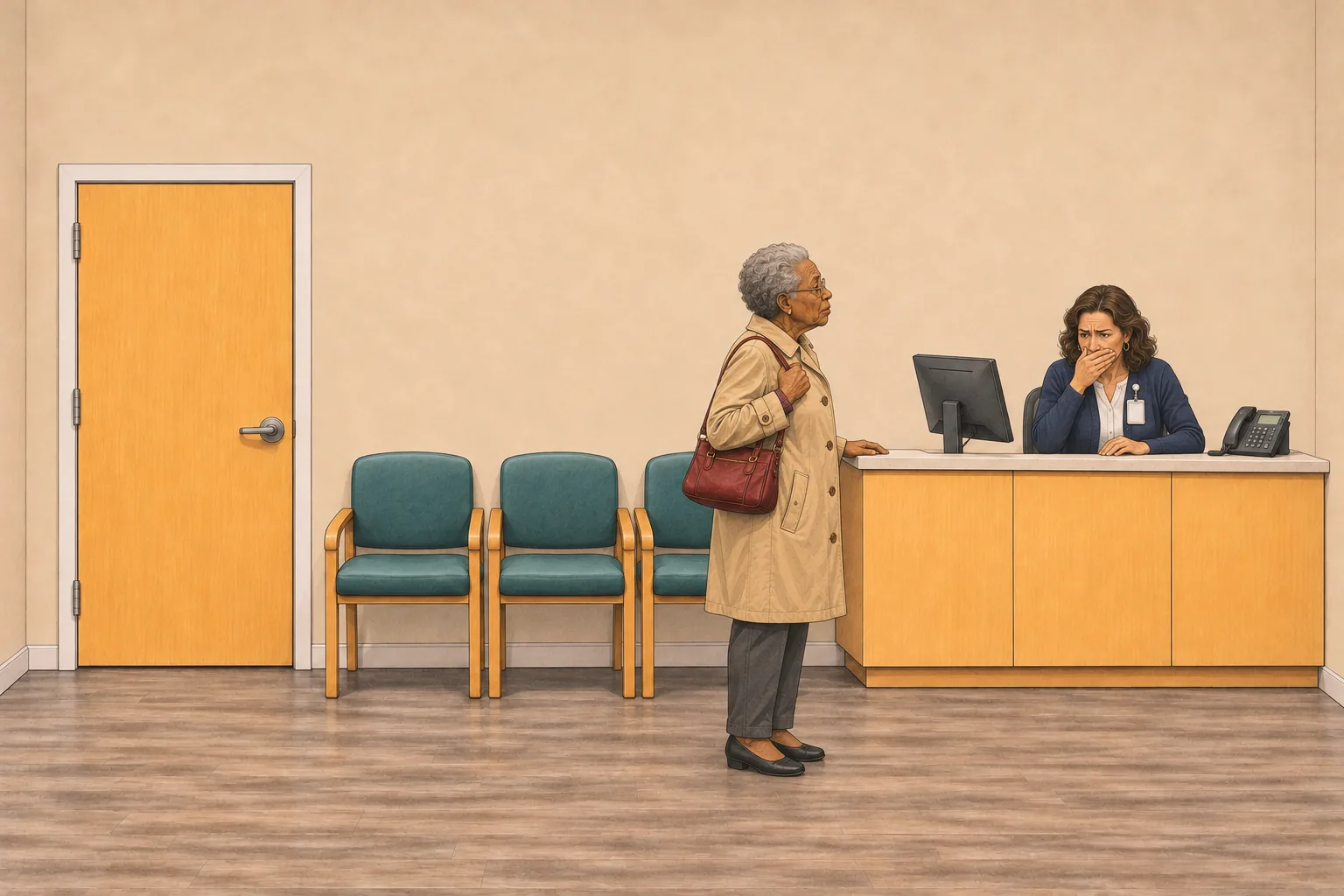 Patient:I can’t wait any longer. I’ll have to reschedule.Front desk (thinking):Wait… her arrival never went through?
She leaves unseen. Her check-in was lost, and the spot she came about now waits for the next opening. Rewind. Same patient, same moment, same problem. This time, the person who hears it owns it.
- The Exceptional ApproachThe action: own it
 MA:I’m so sorry. Let me find out right now.MA (thinking):Not my patient. My problem now.
Stop and own it. He puts his own task down and takes the problem off her hands. - The Exceptional ApproachThe exceptional outcome
 MA:Your check-in got lost. That’s on us. You’re next.Patient:Thank you for walking me back.
Seen today, fixed for next time. He walks her back himself, and the lost check-in is logged so the desk can find the cause.
Example OneAt a glance
The ProblemA patient tells a passing MA she checked in almost an hour ago and may have been missed. She isn’t his patient, and the front desk is on the phone.
The Mediocre ApproachNot my patient
Action
Send her to the desk.
- The MA directs her to the front desk and goes back to his own work
- She waits for the desk to get off the phone
- She tells it all again
Poor outcome
She leaves unseen.
- The lost check-in is found too late
- The spot she came about waits for the next opening
- She leaves trusting the clinic a little less
The Exceptional ApproachOwn it: whoever hears it
Action
Stop and own it.
- The MA puts his task down and apologizes
- He checks with the desk and finds the lost check-in
- Moving her up is a fix anyone may make
Exceptional outcome
Seen today, fixed for next time.
- He walks her back himself
- She tells her story once
- The lost check-in is logged, so the desk can fix the cause
Example Two: “Last Time They Numbed Me, I Fainted”
- The Problem
While rooming a patient for a biopsy, the MA hears him say he fainted the last time he was numbed. Nothing in his chart says so, and the dermatologist isn’t in yet.
 Patient:Fair warning: last time they numbed me, I passed out.Patient (thinking):Big guy, tiny needle. So embarrassing.
Heard while rooming. The doctor isn’t in yet and nothing has been opened: the easiest moment to plan for it. - The Mediocre ApproachThe action
 MA:Got it. I’ll tell the doctor.MA (thinking):Right after I room the next patient.
Heard, not written. It lives only in her head, and the clinic is busy. - The Mediocre ApproachThe poor outcome
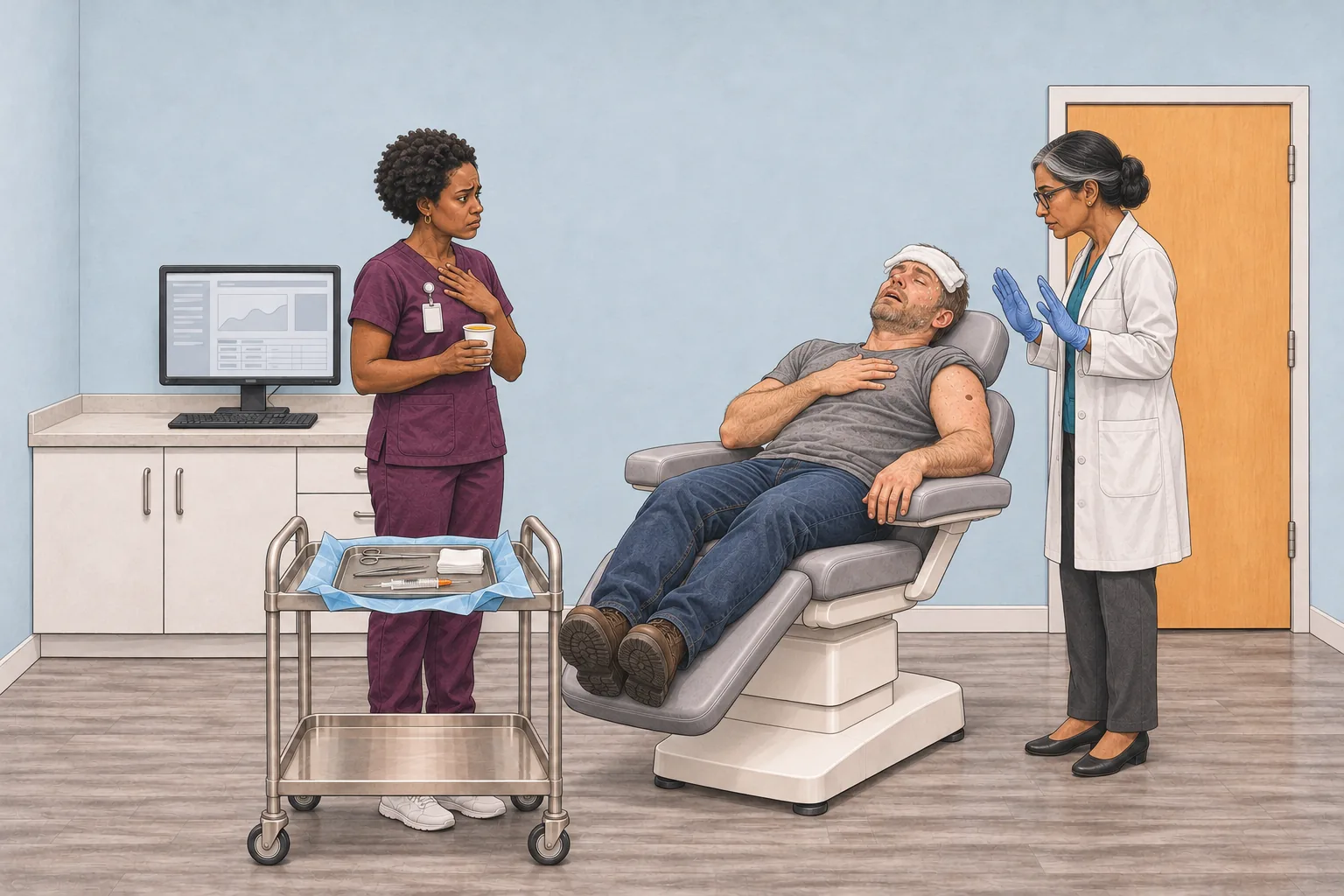 MA (thinking):I meant to tell Dr. Rao…Patient:I told her I faint…Dermatologist:Let’s keep you lying down for a few minutes.
Now everyone waits. He’s recovering instead of being treated, the room backs up, and he had to say it twice. Rewind. Same patient, same moment, same problem. This time, the person who hears it owns it.
- The Exceptional ApproachThe action: own it
 MA:Thanks for telling me. It’s going in your chart right now.MA (thinking):And Dr. Rao hears it before she walks in.
Write it down, pass it on. The warning becomes a chart alert, and the doctor hears it before she walks in. - The Exceptional ApproachThe exceptional outcome
 Patient:Lying down this time? You knew?Dermatologist:It’s in your chart. You only have to tell us once.
Said once, remembered for good. The procedure goes smoothly, and the alert will be there for the next team too.
Example TwoAt a glance
The ProblemWhile rooming for a biopsy, the patient tells the MA he fainted the last time he was numbed. Nothing in his chart says so, and the doctor isn’t in yet.
The Mediocre ApproachKeep it in your head
Action
Hear it, don’t write it.
- The MA says she’ll mention it
- Nothing goes in the chart
- She’s pulled into the next room
Poor outcome
He nearly faints, and says it twice.
- He’s numbed sitting up and goes pale and woozy
- The procedure stops while he recovers; the room backs up
- He has to tell the doctor himself
The Exceptional ApproachOwn it: write it down
Action
Record it and pass it on.
- The MA adds a chart alert while he watches
- The doctor hears it before she walks in
- The tray stays sealed until the plan is set
Exceptional outcome
Said once, remembered for good.
- The doctor does it lying down, her call
- The procedure goes smoothly
- Next visit, the alert is already there
Your clinic
More Moments to Own in a Clinic
Same pattern every time: whoever hears it owns it, fixes what their role allows, and closes the loop before the patient walks away.
| What the patient says | Who owns it | Closed before they leave |
|---|---|---|
| At checkout: “Nobody ever called me about my biopsy.” | The front-desk staffer who hears it checks the chart and walks the question to the nurse; a clinician talks with the patient | The patient leaves with the answer, or knowing who will call, and when |
| On the phone: “My biologic was denied, and my last dose is Friday.” | Whoever answers takes the details once and hands them by name to the authorization coordinator | The patient hears back the same day with the status and the next step |
| In the hallway: a gowned patient looks lost | Whoever sees them walks them where they need to go | Walked, not pointed: they arrive at the right room |
| During rooming: “I’d rather keep my underwear on until the exam needs it.” | The rooming MA honors it and adds it to the chart note | Next visit, nobody has to ask again |
| After a procedure: “My ride has to leave by two.” | The MA who hears it tells the clinician and the front desk right away | The plan fits the ride, or a new ride is arranged, before anyone is rushing |
Adapt the owner and the fix to your own team. Anything clinical goes to a clinician, and the owner stays with it until the patient has an answer.
Your move
Try It Today
Whoever hears it, owns it. Fix it now. Write it down.
Try it for one week. No new software, no budget, no committee.
- Pick three fixes anyone may make on the spot. For example: move a lost check-in to the front of the line, offer a same-week reschedule, or walk a patient to the person who can help.
- Retire “not my department.” Agree on the words instead, “I’ll take care of it,” then walk the problem to the right person yourself.
- Add one “told us once” note to the chart. Fainting with needles, a preferred name, a chaperone, keeping clothes on. Name who reads tomorrow’s notes before clinic.
- Close every loop before the patient leaves. The owner checks back and tells the patient what happened and what comes next.
- Talk about it at the morning huddle. Share one real ownership story and one “had to ask twice” miss each day. Fix the cause, not the person.
Anything urgent still goes straight to the clinician.
Every patient tells someone first. Make that someone the owner.
Explore the Evidence
6 sources · what each source did, what it found, what it supports here, and where it falls short
Ritz-Carlton’s practices and figures come from its own 1999 Baldrige award application and NIST’s summaries of it. Examiners reviewed them, but they are company-reported, not independently audited, and they show what the company did and measured, not what caused its results. The $2,000 authority was a 1999 hotel policy; the clinic version is authority over time, access and the next step, not money or gifts. Northwell’s results are a health system reporting on its own program, in percentile points, with no comparison group. The dermatology preference figures are online ratings of imagined visits. The clinic examples are illustrations of the mechanism, not tested interventions. Status shows how each source was checked: FULL (full text), ABS (abstract), with the coordinator’s 2026-11-09 recheck noted where one was made.
| Source | Type and context | Key finding | What it supports here | Material limitation |
|---|---|---|---|---|
| [1] · FULLRitz-Carlton 1999 Baldrige Application SummaryP03 researcher (full PDF, 2026-10-27); Codex coordinator (Gold Standards, CLASS, process and survey pages, 2026-11-09) | Company award application summary The Ritz-Carlton Hotel Company, 1999 Malcolm Baldrige National Quality Award | Gold Standards: the Three Steps of Service; the Employee Promise (trust, honesty, respect, integrity, commitment); Basics 7, 10, 12, 13 and 16; an empowerment process (sense a need, leave routine work, act at once, check the reaction, document, escalate); daily line-ups on every shift; CLASS shares guest preferences; 12 weighted daily defects, with a missing guest preference at 10 points; 1998 staff survey: decision authority 83% vs a 55% norm, empowerment 85% vs 67%; 91% top-two-box overall satisfaction vs 84% (business) and 80% (leisure) for the leading competitor; pre-tax ROI 5.3% (1995) to 12.9% (1999) | The hotel story: complaint ownership, breaking away from routine work, the step-by-step process, escorting, recording and sharing preferences, daily reinforcement; flip cards 1 and 2; the return on investment | Written by the company for an award; examiners reviewed it but did not audit it; several charts are unlabeled; nothing separates the effect of any single practice; describes the company in its 1999 era |
| [2] · FULLNIST: The Ritz-Carlton Hotel Company, 1999 Award RecipientP03 researcher (full page, 2026-10-27); Codex coordinator (recheck, 2026-11-09) | Government award summary NIST Baldrige program profile of the 1999 service-category winner | Any employee can spend up to $2,000 to immediately correct a problem or handle a complaint; turnover declined for nine consecutive years; Baldrige awards in 1992 and 1999, the first service company to win twice | The $2,000 authority; the two Baldrige awards; turnover falling nine years in a row | Summarizes data the applicant supplied; not an audit; the $2,000 figure is a 1999 hotel policy, not a spending guide for clinics, and the profile does not say how often it was used |
| [3] · FULLNIST Blogrige: Ritz-Carlton Practices for Building a World-Class Service Culture (2015)P03 researcher (full page, 2026-10-27); Codex coordinator (recheck, 2026-11-09) | Government blog interview A Ritz-Carlton performance-improvement manager, 2015 | Daily line-ups discuss one of the 12 Service Values, with examples and role-play | Why It Works, “Close the loop”: daily reinforcement with real examples | A company manager describing company practice; a blog, not peer-reviewed; 2015 practice differs from the 1999 standards |
| [4] · ABSBleustein et al. 2014P03 researcher (abstract, 2026-10-28); Codex coordinator (publisher text, 2026-11-09) | Cross-sectional survey analysis 11,352 patient survey responses from 44 outpatient clinics at one academic medical center | Longer waits were associated with lower confidence in the provider and lower perceived quality of care | The Results, opening: longer waits went with lower confidence and lower ratings of care | An association, not proof of cause; one health system; a 23% response rate |
| [5] · FULLGierlinger, Barden & Giammarinaro 2020 (Northwell Health)P03 researcher (full text via Europe PMC, 2026-10-27); Codex coordinator (full paper, 2026-11-09) | Self-reported case report Northwell Health’s patient-experience leadership structure, 2014–2018 | 63 Culture Leaders; Culture Leader engagement 4.60, in the 99th percentile; HCAHPS Communication with Doctors and Communication with Nurses up 11 percentile points (2015–2018), from the bottom quartile in 2014 | Flip card 3: 11 percentile points higher patient ratings of doctor and nurse communication | Written by Northwell staff about their own program; no comparison group; many initiatives ran at once; gains are percentile points, not percentage gains |
| [6] · FULL (P03) + ABS (recheck)Cline, Gomolin & Safai 2020P03 researcher (full PDF, 2026-10-28); Codex coordinator (abstract, 2026-11-09) | Online survey of imagined visits 225 adults rating hypothetical dermatology visit features on a 1–5 scale | Satisfaction 3.0, 1.9 and 1.5 at waits of 10, 30 and 60 minutes; gowning before meeting the dermatologist 2.7 vs 3.7 when the patient chooses; removing underwear 2.0 vs 3.7 keeping it on | Flip card 4: waits and choices in a dermatology visit | Stated preferences about imagined visits, not measured results of real care; online respondents, not necessarily dermatology patients; peer-review status not confirmed |
References
- The Ritz-Carlton Hotel Company, L.L.C. “1999 Malcolm Baldrige National Quality Award Application Summary.” Hosted by NIST (© 2000). nist.gov/system/files/documents/2017/10/11/RCHC_Application_Summary.pdf.
- NIST Baldrige Performance Excellence Program. “The Ritz-Carlton Hotel Company, L.L.C.: 1999 Award Recipient, Service.” NIST (page created 2010, updated 2022). nist.gov/baldrige/ritz-carlton-hotel-company-llc.
- Schaefer C. “Ritz-Carlton Practices for Building a World-Class Service Culture.” NIST Blogrige, 16 March 2015. nist.gov/blogs/blogrige/ritz-carlton-practices…service-culture.
- Bleustein C, Rothschild DB, Valen A, et al. Wait times, patient satisfaction scores, and the perception of care. Am J Manag Care. 2014;20:393–400. pubmed.ncbi.nlm.nih.gov/25181568/.
- Gierlinger S, Barden A, Giammarinaro N. Impact of a patient experience leadership structure on performance and engagement. J Patient Exp. 2020;7(2) (published online 2019). doi.org/10.1177/2374373519831079.
- Cline A, Gomolin T, Safai B. Factors influencing patient satisfaction in dermatology. SKIN: The Journal of Cutaneous Medicine. 2020;4(6):543–547. jofskin.org/index.php/skin/article/download/925/pdf/5488.
Explore the evidence · Try it this week · Read the Ritz-Carlton Daily Brief · More lessons from The Exceptional Private Practice