Chick-fil-A Makes Asking Feel Welcome. Your Clinic Can, Too.
Five everyday ways to make patients feel welcome to ask, and to back that welcome with follow-through.
People need to know that asking for help is welcome. Too often, a request lands like an interruption. You ask for one more thing, and the answer comes without a glance up from the screen. It may have been polite enough, but you got the message: your request was a bother. So next time you ask for less. You skip the second question, or you apologize before you speak. When asking feels like a burden, people stop asking, and the need doesn’t go away.
The guest says: “Thank you!”
The team member says: “My pleasure.”
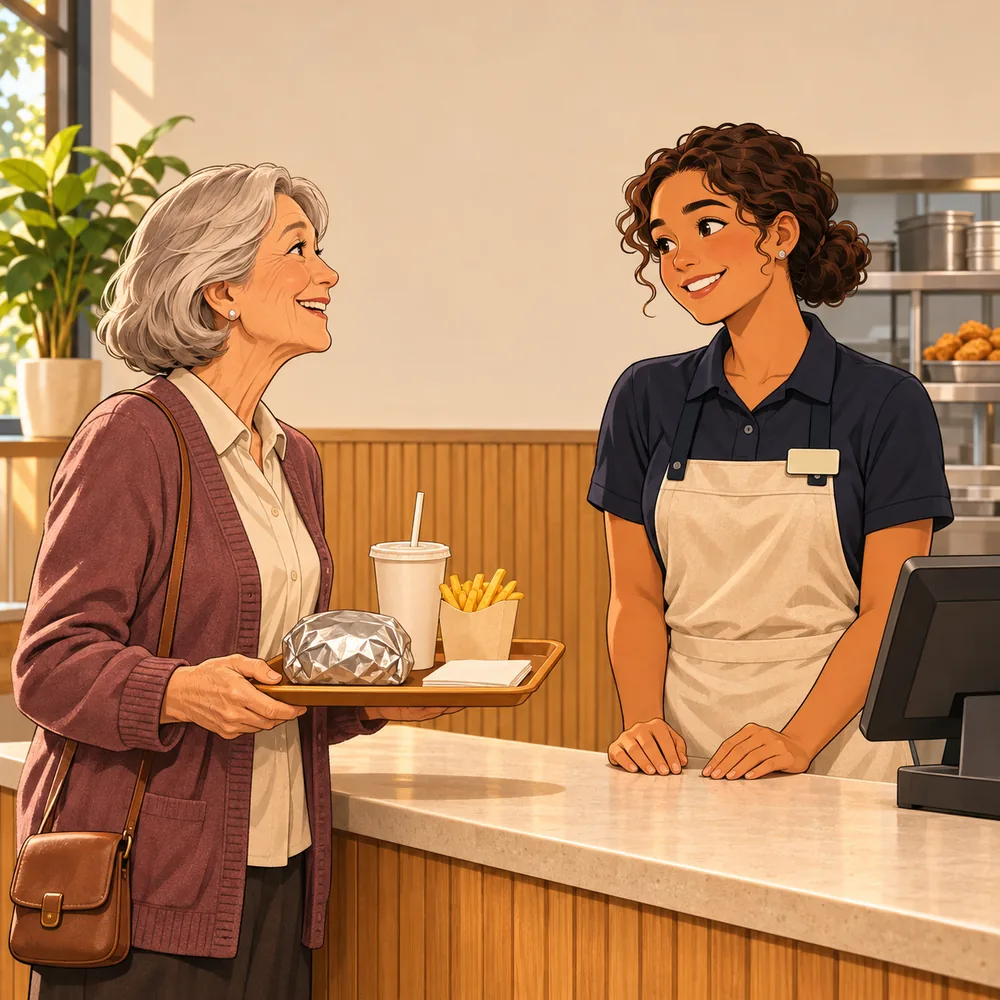
Answer thanks like you mean it. Look up from the register. Eye contact and a real smile make two words true.
The father says: “Sorry, could we get a high chair?”
The team member says: “Of course! I’ll bring one over.”

Welcome the next ask. Stop, turn toward the person and say yes gladly. Then do it.
The guest says: “You didn’t have to do that!”
The team member says: “My pleasure.”
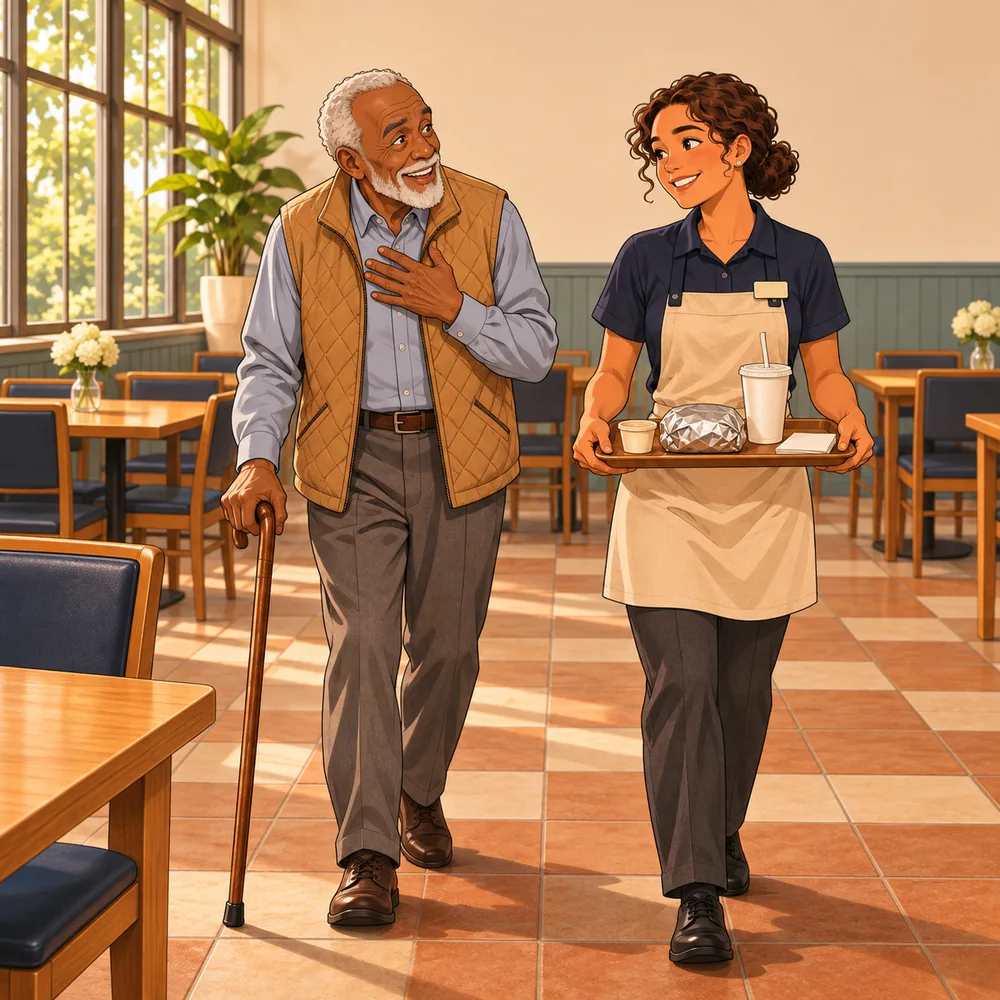
Go a second mile. A small extra no one asked for shows the welcome was meant.
It started with a reply to “thank you.” Chick-fil-A’s founder, Truett Cathy, was a guest at a high-end hotel. When he thanked an employee, the answer came back sincerely: “my pleasure.” In the company’s telling, he wanted his own guests to feel that same welcome, so he asked everyone in his restaurants to answer thanks the same way.1 Press accounts later named the hotel as a Ritz-Carlton.2 The reply answers the question a hesitant customer is silently asking: Was I a bother?
It took modeling, not just a request. At the company’s 2001 seminar for franchise owners, Cathy told the story and asked staff to adopt the reply. Many were hesitant, a former marketing chief recalled.2 The phrase took hold after 2003, when his son Dan Cathy, then chief operating officer, began saying it himself and urging others to follow; the change took a few years.2, 3 He called the phrase “a service signature for us, almost like two pickles on a sandwich.”2
The words came with habits that make them believable. Business Insider described the service behaviors Chick-fil-A teaches alongside the phrase, its “Core 4”: eye contact, a smile, an enthusiastic tone and staying connected to the guest. It also teaches “second-mile service”: doing something beyond what was asked.3 Said to a screen, “my pleasure” is just a phrase. Said with eye contact, and followed by action, it tells guests their request was welcome.
The words were never the whole point. A hesitant customer isn’t asking whether staff are polite. They’re asking whether their request is a burden. A sincere reply answers that question; attention shows it was meant; follow-through proves it. Miss any one, and people go back to rationing what they ask.
Principles of Excellence
- A glad reply invites the next request. When the answer to “thank you” says the help was welcome, people feel free to ask again instead of saving their questions.
- Attention makes the words believable. Eye contact, a smile and staying connected turn “my pleasure” from a slogan into a signal people trust.
- Action keeps the welcome true. A warm reply is a promise. Doing what you said, and sometimes a little more, the “second mile,” shows it was meant.
- Leaders make it normal. The phrase spread when leaders used it themselves, over years, not when it was announced.
5 Exceptional Practices for your Clinic
- When a caller starts with “Sorry to bother you.” Answer the apology first: “I’m glad you called.” Then name the next step and its owner, such as “I’m sending your biopsy question to the doctor’s nurse now,” and say how they’ll hear back and when to call again if they haven’t, using the timeframe your clinic sets.
- When a patient says “One more spot…” at the door. Earlier, right after the main concern, the clinician asks: “Is there something else you’d like us to look at today?” If a spot still comes up at the door, the clinician takes a brief look and decides whether it can wait. If it can’t, book more time before the patient leaves.
- When a patient hands you a form. Say “Happy to help,” then check it for missing pages and signatures before they leave. Tell them who will complete it and when to expect it, based on your clinic’s usual turnaround, and call them if anything is missing.
- When a patient thanks you. Look up from the screen and answer in words you mean: “My pleasure,” “Glad to help” or “Of course.” Then offer one small extra they didn’t ask for, such as walking them to checkout.
- When a colleague asks for help mid-clinic. Answer the way you would a patient: “Sure, what do you need?” Then do it, or say when you can and come back. Physicians and managers go first, so the habit spreads by example.
Explore the Evidence Further
Explore the Evidence Further. All 16 sources, with methods, findings and clinic applications
Sixteen sources, grouped by kind of evidence: company and press accounts, research in clinical settings, and service research outside health care. Each row gives the design and its main caution, the key finding, why it matters and a way to apply it. Study names link to the original sources, and the full references close this section. None of these sources tested Chick-fil-A’s practices in a dermatology clinic, so every application is our proposal, not a tested intervention.
The Chick-fil-A practice: company and press accounts
| Study or source | Setting, design and sample | Key finding | Why it matters | How to Apply It to Your Derm Clinic |
|---|---|---|---|---|
| Chick-fil-A, “Why do team members say ‘My Pleasure’?”1 | Company account: the company’s own telling, undated, with no outcome claim. Chick-fil-A customer-support page. | Founder Truett Cathy heard a sincere “my pleasure” from an employee at a high-end hotel after thanking him. He wanted guests to feel the same, and asked Operators, Team Members and staff to answer thanks with “my pleasure.” The page names no hotel. | The origin and the intent: make guests feel their request was welcome. | Proposed: agree as a team what a reply to “thank you” or “sorry to bother you” should tell a patient, then let each person say it in their own words. |
| Meyersohn, CNN Business, 20222 | Press account: a feature built on interviews with company figures, looking back years later. Read in WRAL’s republication. |
| Adoption took modeling and time, not just an instruction. | Proposed: have physicians and the practice manager model the reply first, before asking anyone else to change. |
| Johnson, Business Insider, 20193 | Press account: a feature drawing partly on one former executive, former chief marketing officer Steve Robinson. |
| The phrase sat inside a wider system of attention and extra effort. | Proposed: pair any agreed reply with the behaviors that make it believable: look up, face the person and stay with them until the next step is clear. |
| Ritz-Carlton Gold Standards16 | Company standards: stated commitments, not observed practice. Published standards of the hotel chain that press accounts name. | The Service Values include “I own and immediately resolve guest problems.” | The hotel tradition behind the reply: one person owns the welcome. | Proposed: when you welcome a request, own it until you hand it to a named person. |
| American Customer Satisfaction Index, 20264 | National satisfaction survey: a ranking, not a test of any practice. US quick-service restaurants, April 2025 to March 2026; 16,464 completed surveys across all restaurants. | Chick-fil-A had led the quick-service category for 11 years. In June 2026, Jersey Mike’s scored 84 and Chick-fil-A 83 (unchanged); the industry average was 79. | Context for the brand’s reputation, dated; it does not show that the phrase caused satisfaction. | Proposed: judge your own changes by local signals, such as apologetic calls and slipped callbacks, not by rankings. |
Clinical research: randomized studies and a meta-analysis
| Study or source | Setting, design and sample | Key finding | Why it matters | How to Apply It to Your Derm Clinic |
|---|---|---|---|---|
| Heritage et al. 2007, Journal of General Internal Medicine6 | Randomized comparison of wording: physicians were randomized, not patients; acute visits; the main result covers visits where the wording was used as intended. 20 community family physicians in Los Angeles County and Pennsylvania; 224 patients; videotaped visits and surveys before and after. |
| One word changed whether patients raised more concerns, in real visits. | Proposed: clinicians ask “Is there something else you’d like us to look at today?” right after the main concern, while there is time to plan. |
| Pettit et al. 2018, Western Journal of Emergency Medicine12 | Randomized trial, no effect found: one brief refresher; medical students; one emergency department system. 474 observed encounters (231 control, 243 intervention). | A 10-minute video and handout on six scripted communication behaviors produced no detectable change in their use or in patient satisfaction. Explaining the care plan was associated with better-rated communication. | A brief script alone did not change behavior; explaining what happens next mattered more. | Proposed: agree on what replies must do, not a script, and practice explaining the next step. |
| Griffey et al. 2015, Journal of Communication in Healthcare15 | Randomized controlled study: emergency patients with limited health literacy; sample size not given in the abstract. | Teach-back improved comprehension of medications, self-care and follow-up, but not satisfaction or how well patients felt they understood. | Follow-through can be invisible to patients and still matter. | Proposed: after a procedure, ask the patient to say back how results or aftercare will be handled, using your clinic’s written instructions. |
| Kelley et al. 2014, PLoS One13 | Meta-analysis of randomized trials: few eligible trials, most not designed to test the relationship; one author disclosed a commercial interest. 13 randomized controlled trials. | Improving the patient-clinician relationship had a small but statistically significant effect on health outcomes (d = 0.11). | Calibrates expectations: a welcoming reply helps concerns come forward; it is not a treatment. | Proposed: measure the welcome by what it brings out, such as questions raised and callbacks kept, not by promised health effects. |
Clinical research: what patients describe
| Study or source | Setting, design and sample | Key finding | Why it matters | How to Apply It to Your Derm Clinic |
|---|---|---|---|---|
| Frosch et al. 2012, Health Affairs5 | Qualitative focus groups: experiences, not frequencies; one region. Six groups, 48 adults, San Francisco Bay Area. | Even affluent, well-educated participants felt compelled to defer to physicians, and feared being labeled “difficult.” | The need behind this brief: many patients feel that asking is a burden. | Proposed: treat “sorry to bother you” as a signal, and answer the apology before the request. |
Service research outside health care: experiments
| Study or source | Setting, design and sample | Key finding | Why it matters | How to Apply It to Your Derm Clinic |
|---|---|---|---|---|
| Packard and Berger 2021, Journal of Consumer Research7 | Field text analysis and experiments: commercial customer service, not health care; effect sizes not read. Five studies, including more than 1,000 real interactions in two field settings. | When employees used concrete language, customers were more satisfied, more willing to buy and bought more, because they inferred the employee was listening. | Specific next steps make a welcome credible. | Proposed: name the concrete next step: “I’m sending this to the nurse now,” not “We’ll look into it.” |
| Packard, Moore and McFerran 2018, Journal of Marketing Research8 | Laboratory experiments and field data: commercial settings; effect sizes not read. Five studies of customer-service language. | Agents who said “I” rather than “we” were seen as acting on the customer’s behalf, which raised satisfaction and purchases; extra “you” language helped little and sometimes backfired. | Naming an owner strengthens the welcome. | Proposed: say “I’ll” only when you will do it; otherwise name who will. |
| Hennig-Thurau et al. 2006, Journal of Marketing9 | Staged experiment: actors in a simulated service encounter; one study. 223 consumers; more or less smiling, crossed with surface or deep acting. | Authenticity of the employee’s display affected customers’ emotions; the amount of smiling did not. | Why compulsory cheer is the wrong lesson. | Proposed: don’t mandate smiles or a phrase; let people use words they mean. |
| You et al. 2020, Journal of Marketing14 | Experiments: consumer service-failure scenarios, not health care. Studies 1a to 7. | After a service failure, “thank you” often restored satisfaction better than “sorry,” by raising customers’ self-esteem; it worked as well as thanks plus apology. | A related reframing: credit the person’s patience. | Proposed: for an ordinary wait, try “Thank you for waiting”; for a real error in care, a clear acknowledgment still comes first. |
Service research outside health care: observational studies
| Study or source | Setting, design and sample | Key finding | Why it matters | How to Apply It to Your Derm Clinic |
|---|---|---|---|---|
| Barger and Grandey 2006, Academy of Management Journal10 | Field study of real encounters: observational; one setting. 173 customers; employees’ smiles coded at three points. | Customers mirrored smiles, but their appraisal of service quality, not their mood, carried the link between smiling and satisfaction. | Warmth helps when it reads as good service. | Proposed: pair warmth with competence: the right answer, the right owner and the promised call. |
| Hülsheger and Schewe 2011, Journal of Occupational Health Psychology11 | Meta-analysis of correlational studies: associations, not proof of cause. 95 independent studies; 494 correlations. | Surface acting, displaying a feeling you don’t have, was linked to impaired well-being (ρ .39 to .48) and poorer job attitudes; deep acting showed weak links to strain and positive links to customer satisfaction. | Performed feeling costs staff. | Proposed: if warmth starts to feel forced, look at workload first, not attitude. |
Across all sixteen sources:
- None tested Chick-fil-A’s practices or a dermatology clinic.
- Company and press accounts describe intent and history, not outcomes; a satisfaction ranking is not evidence that one phrase caused it.
- Commercial experiments and field studies show mechanisms, such as feeling listened to, not health outcomes.
- In clinical research, how a question was asked changed what patients raised; improving the patient-clinician relationship had small effects on health outcomes.
Principles of Excellence: related evidence from other settings
The main text explains Chick-fil-A’s practices in plain English. These sources test related ideas elsewhere; none measured Chick-fil-A.
| Point in the brief | Related evidence |
|---|---|
| A glad reply invites the next request. | Chick-fil-A’s stated intent (company account).1 Patients describe holding back for fear of seeming difficult (qualitative focus groups).5 In primary care, asking for “something else” rather than “anything else” brought out more concerns (randomized comparison of wording).6 After service failures, thanking customers for their patience often restored satisfaction better than apologizing (consumer experiments).14 |
| Attention makes the words believable. | The Core 4 behaviors (press account).3 In a staged experiment, authenticity mattered and the amount of smiling did not; in real encounters, smiles helped through perceived service quality (an experiment and an observational field study).9, 10 Performing feelings you don’t have is linked to strain (meta-analysis of correlational studies).11 A brief scripting refresher changed nothing measurable (randomized trial).12 |
| Action keeps the welcome true. | Second-mile service (press account).3 Concrete and first-person language signaled listening and ownership (commercial experiments and field data).7, 8 Teach-back improved understanding (randomized study).15 The Ritz-Carlton’s “I own and immediately resolve guest problems” (company standard).16 |
| Leaders make it normal. | Hesitation at the 2001 seminar, and adoption after leaders modeled the phrase from 2003 (press accounts).2, 3 No study here tests leaders’ example directly. |
Our clinic suggestions: proposed, not tested
The five practices and today’s action are our suggestions for a dermatology practice, not a tested program.
| Suggestion | What it draws on |
|---|---|
| When a caller apologizes: welcome the call first, then name the next step, its owner and the clinic’s timeframe. | Patients’ fear of seeming difficult (qualitative); concrete, first-person replies (commercial experiments).5, 7, 8 |
| “One more spot” at the door: the clinician asks about “something else” early; at the door, the clinician takes a brief look and decides whether it can wait; book time if needed. | The “something else” wording study (randomized comparison of wording, primary care).6 |
| When a patient hands you a form: check it before they leave, name the owner and timing, and call if anything is missing. | Concrete next steps and named owners (commercial experiments); owning problems (company standard).7, 8, 16 |
| When a patient thanks you: answer in words you mean, with eye contact, and offer one small extra. | The “my pleasure” reply, the Core 4 and second-mile service (company and press accounts); authenticity over the amount of smiling (experiment).1, 3, 9 |
| When a colleague asks for help: answer gladly, then do it or say when; leaders go first. | Adoption through leaders’ example (press accounts).2, 3 No study here tests it in clinics. |
| Try it today: tally apologetic calls, answer each with a welcome and a next step, then huddle. | Patients’ fear of seeming difficult (qualitative); a brief script alone changed little, so agree on what replies must do (randomized trial).5, 12 |
Sources
- Chick-fil-A. Why do Chick-fil-A Team Members and employees say “My Pleasure”? Customer support page, undated. chick-fil-a.com
- Meyersohn N. Why Chick-fil-A workers always say ‘my pleasure.’ CNN Business, 9 April 2022; republished by WRAL. wral.com
- Johnson H. Chick-fil-A consulted Ritz-Carlton and fine-dining pro Danny Meyer on how to make its customer service better than any other fast-food chain. Business Insider (India edition), 19 July 2019. businessinsider.in
- American Customer Satisfaction Index. Jersey Mike’s debuts as top-rated quick-service restaurant, ending Chick-fil-A’s 11-year reign, ACSI data shows. Business Wire, 16 June 2026. businesswire.com
- Frosch DL, May SG, Rendle KA, Tietbohl C, Elwyn G. Authoritarian physicians and patients’ fear of being labeled ‘difficult’ among key obstacles to shared decision making. Health Aff (Millwood). 2012;31(5):1030-8. PubMed 22566443 · doi:10.1377/hlthaff.2011.0576
- Heritage J, Robinson JD, Elliott MN, Beckett M, Wilkes M. Reducing patients’ unmet concerns in primary care: the difference one word can make. J Gen Intern Med. 2007;22(10):1429-33. PubMed 17674111 · doi:10.1007/s11606-007-0279-0
- Packard G, Berger J. How concrete language shapes customer satisfaction. J Consum Res. 2021;47(5):787-806. doi:10.1093/jcr/ucaa038
- Packard G, Moore SG, McFerran B. (I’m) happy to help (you): the impact of personal pronoun use in customer-firm interactions. J Mark Res. 2018;55(4):541-55. doi:10.1509/jmr.16.0118
- Hennig-Thurau T, Groth M, Paul M, Gremler DD. Are all smiles created equal? How emotional contagion and emotional labor affect service relationships. J Mark. 2006;70(3):58-73. doi:10.1509/jmkg.70.3.058
- Barger PB, Grandey AA. Service with a smile and encounter satisfaction: emotional contagion and appraisal mechanisms. Acad Manage J. 2006;49(6):1229-38. doi:10.5465/amj.2006.23478695
- Hülsheger UR, Schewe AF. On the costs and benefits of emotional labor: a meta-analysis of three decades of research. J Occup Health Psychol. 2011;16(3):361-89. PubMed 21728441 · doi:10.1037/a0022876
- Pettit KE, Turner JS, Pollard KA, et al. Effect of an educational intervention on medical student scripting and patient satisfaction: a randomized trial. West J Emerg Med. 2018;19(3):585-92. PubMed 29760860 · doi:10.5811/westjem.2018.1.35992
- Kelley JM, Kraft-Todd G, Schapira L, Kossowsky J, Riess H. The influence of the patient-clinician relationship on healthcare outcomes: a systematic review and meta-analysis of randomized controlled trials. PLoS One. 2014;9(4):e94207. PubMed 24718585 · doi:10.1371/journal.pone.0094207
- You Y, Yang X, Wang L, Deng X. When and why saying “thank you” is better than saying “sorry” in redressing service failures: the role of self-esteem. J Mark. 2020;84(2):133-50. doi:10.1177/0022242919889894
- Griffey RT, Shin N, Jones S, et al. The impact of teach-back on comprehension of discharge instructions and satisfaction among emergency patients with limited health literacy: a randomized, controlled study. J Commun Healthc. 2015;8(1):10-21. PubMed 26617669 · doi:10.1179/1753807615Y.0000000001
- The Ritz-Carlton Leadership Center. Foundations of our brand: Gold Standards. ritzcarltonleadershipcenter.com